
You have cleaned the wall, covered the stain and applied fresh paint. For a while, everything looks better. Then a dark patch appears again, the paint starts to bubble or a musty smell returns. It is frustrating, but it usually means the finish has changed while the cause remains.
Lasting results depend on understanding where the moisture comes from, choosing the right treatment and preparing the wall properly afterwards. Here is how to approach recurring damp without repeating the same decorating cycle.
Why fresh paint cannot solve an active damp problem
Paint changes the surface of a wall. It does not repair a leaking gutter, stop water entering damaged masonry or prevent condensation forming on a cold surface. If moisture is still reaching the wall, it can affect the new finish just as it affected the old one.
Moisture can weaken the bond between paint and plaster, causing peeling or blistering. Wallpaper may lift, while plaster can soften or crumble. Some masonry also contains salts that move with moisture and remain near the surface as the wall dries. Certain salts can attract moisture from the air, leaving patches that continue to look or feel damp.
A stain blocking primer can help stop old discolouration showing through a new finish, but it is not damp treatment. Its place is after the moisture source has been addressed and the substrate is suitable for decoration. Covering a mark before that point can hide useful clues without resolving the problem.
Different moisture sources need different solutions
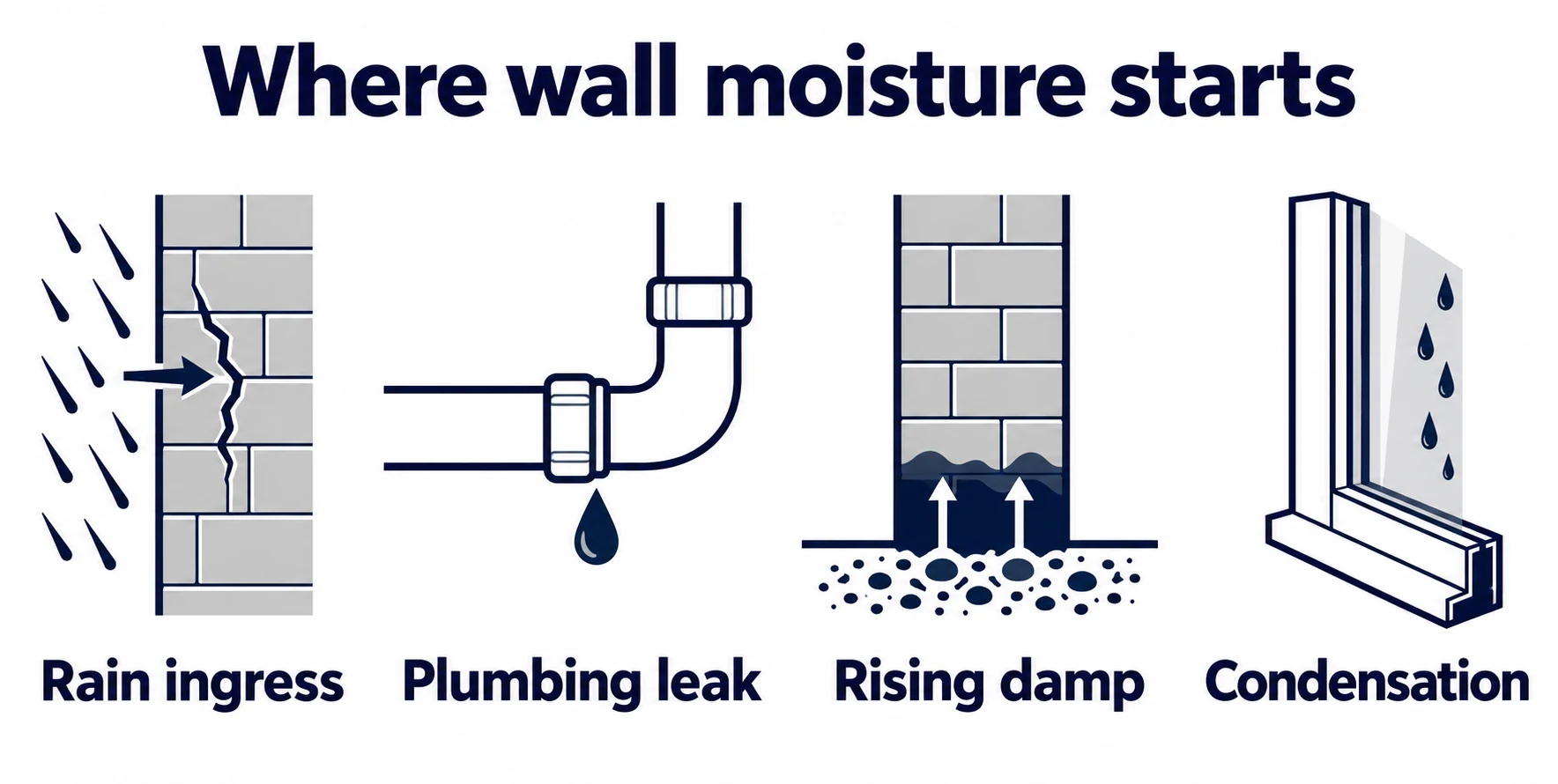
Damp is a description of a condition, not a diagnosis. Similar marks can have different causes, so appearance alone is not enough to choose a treatment.
- Condensation: Moisture in the air settles on cold surfaces. It often affects windows, external wall corners and areas behind furniture where air movement is limited.
- Penetrating damp: Water enters through a defect in the building, such as damaged pointing, faulty gutters or gaps around openings. Patches may become more noticeable after rain.
- Plumbing leaks: Water from a pipe, fitting or appliance can affect walls and floors, sometimes away from the actual leak.
- Rising damp: Ground moisture moves upwards through porous masonry. It requires careful assessment because other problems can produce similar symptoms near floor level.
More than one issue can exist at the same time. A cold wall might suffer condensation while also receiving water from an external defect. Treating only one source may leave the other active.
What to check before redecorating again
Start by recording when the patch changes. Does it worsen after rainfall, after showering or during colder weather? Does it stay in one place or spread? These observations help an assessment connect the symptoms with a likely source.
From a safe position at ground level, look for overflowing gutters, obvious cracks and soil or paving sitting high against the wall. Inside, check accessible plumbing, look for staining beneath bathrooms and notice whether furniture is pressed tightly against affected walls. Do not climb onto roofs or disturb electrical fittings to investigate.
A damp assessment should consider the building, its materials, ventilation and the pattern of moisture together. A handheld meter reading on its own cannot reliably establish the cause, particularly where salts or different materials affect the reading.
Avoid stripping sound finishes simply to investigate without advice. If plaster is loose or moisture is near electrical fittings, keep clear of the affected area and seek appropriate professional help.
How proper damp treatment addresses the cause
The right treatment follows the diagnosis. Water entering through a gutter or masonry defect calls for the relevant repair. A plumbing leak needs its source fixed. Where external ground levels bridge an existing damp proof course, that bridging needs consideration rather than simply covering the internal damage.
Where rising damp is confirmed and the construction is suitable, treatment may involve injecting a damp proofing product into the mortar bed. This is intended to create a barrier against moisture moving upwards through the masonry. It is a specific treatment for an appropriate diagnosis, not a general cure for every damp patch.
Internal restoration matters too. Plaster affected by salts or deterioration may need removal and replacement with a suitable system. Sound plaster does not automatically need replacing everywhere.
Pinnacle Property Care provides damp proofing treatments, including injected treatment into the mortar bed. Understanding the moisture source helps establish where this approach is appropriate and what preparation the wall needs.
Reducing condensation without overlooking ventilation
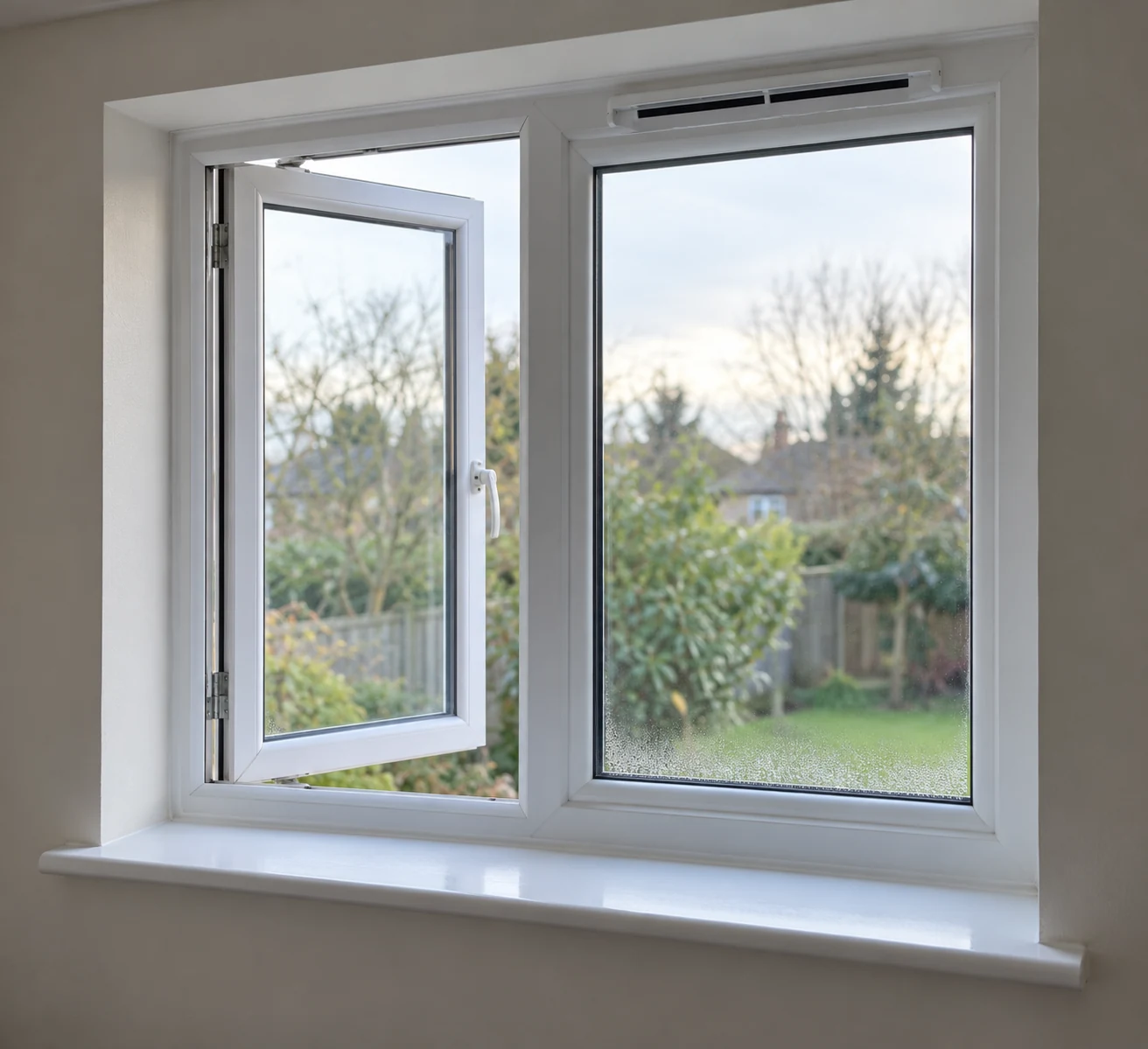
If condensation is contributing to recurring marks, managing indoor moisture and surface temperatures can help. Use working extractor fans when cooking or bathing, keep existing ventilation openings clear and avoid drying washing indoors without suitable ventilation. Leaving space behind larger furniture can improve air circulation against cold walls.
Consistent heating can help keep surfaces warmer, but heating alone does not remove the moisture produced by everyday activities. Ventilation and moisture control need to work alongside it.
Insulation can also help reduce heat loss and keep parts of the home warmer. Where heat is escaping through the roof, appropriately specified loft insulation can support a more comfortable home. It is not a substitute for fixing leaks or diagnosing damp, and roof ventilation must remain effective.
A dehumidifier may help manage indoor humidity, but collecting water does not prove the underlying cause has been resolved. Persistent patches still deserve investigation.
When the wall is ready for a new finish
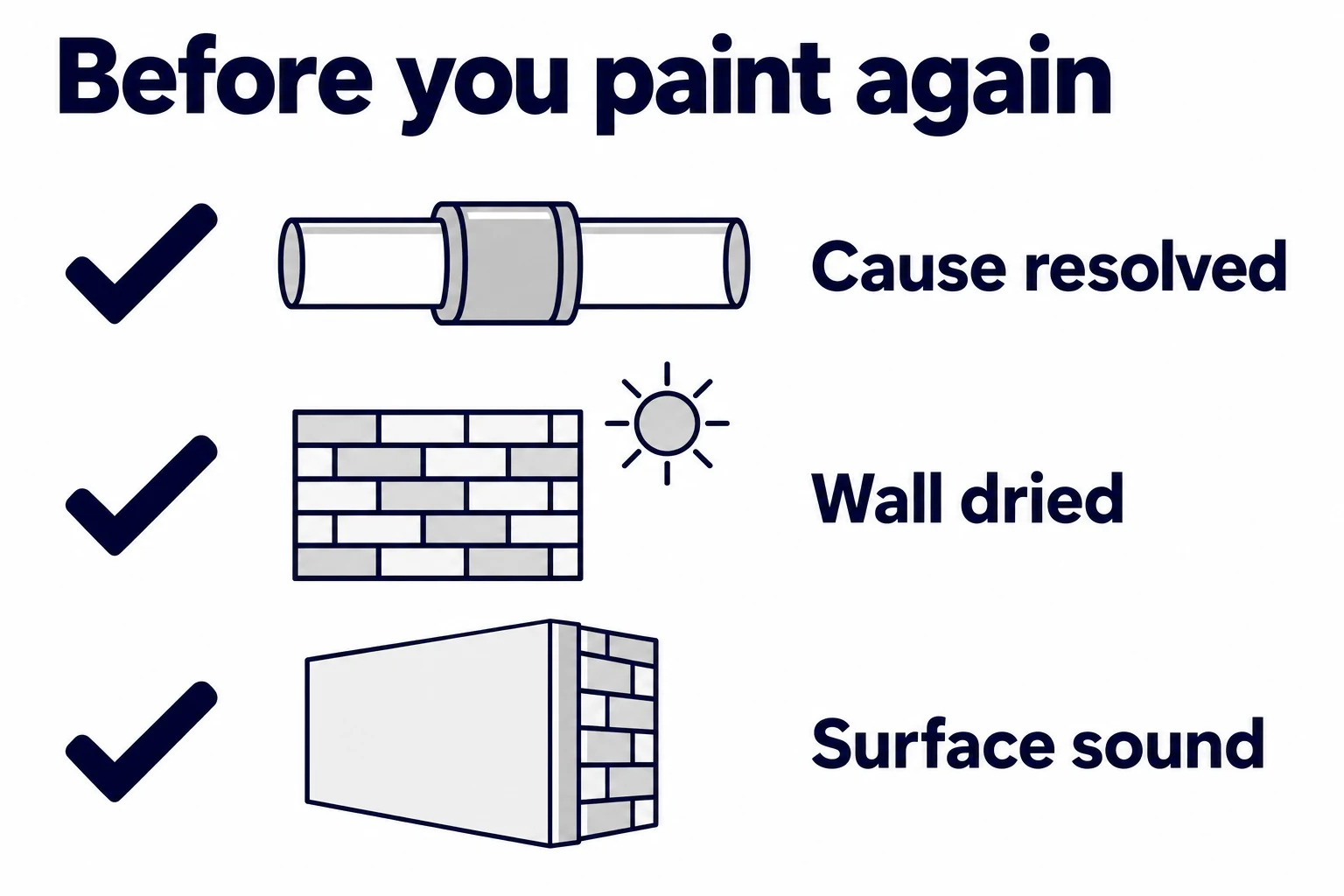
Once the source has been addressed, allow the wall and any replacement plaster to reach a suitable condition before decorating. The right point depends on the materials, the amount of moisture present and the treatment used. A surface that feels dry is not always ready throughout.
Follow the advice supplied for the treatment and plaster system, including any requirements for primers and paint. Some traditional wall constructions need finishes that allow moisture vapour to pass through readily. An unsuitable coating can interfere with that behaviour.
Before painting, check that the surface is sound and properly prepared. Persistent staining may need a compatible stain blocking primer, but only once active moisture has been dealt with.
Keep an eye on the area afterwards, particularly following rain or colder weather. If marks return, report when they appeared rather than immediately covering them. That information can help distinguish remaining moisture, staining and a continuing source.
- Fresh paint covers a mark but does not remove its moisture source.
- Condensation, leaks and rising damp need different responses.
- Injected treatment is appropriate only where the diagnosis and construction support it.
- Suitable plaster preparation and finishes help protect the result.
Frequently asked questions
Does a returning stain always mean the wall is still damp?
No. Old staining can show through paint even after the moisture source has been resolved. Salts can also affect the surface. Check the wall’s condition before deciding whether it needs further treatment or simply suitable preparation.
Can I use anti mould paint instead of damp treatment?
Anti mould paint may help resist mould growth on a suitable surface, but it does not repair leaks or remove excess humidity. Any existing mould also needs appropriate cleaning and its moisture source addressed.
How long should I wait before repainting a treated wall?
There is no single waiting period that suits every wall. Follow the guidance for the treatment, plaster and coating system, and confirm that the surface is ready rather than relying on appearance alone.
Get to the cause of recurring damp
If damp patches keep returning, speak to Pinnacle Property Care about the symptoms you are noticing. We can help you understand the next steps towards appropriate treatment and a sound finish.